Turkey Devonshire: An awesome Pittsburg comfort food.

Have you ever heard of a Turkey Devonshire sandwich? Well I hadn’t until Christmas 2024 when I found myself looking for a recipe for Turkey ala King and discovered the Devonshire sandwich recipe. The photos looked good and hearty and the sauce reminded me kind of eggs benedict, which I love.
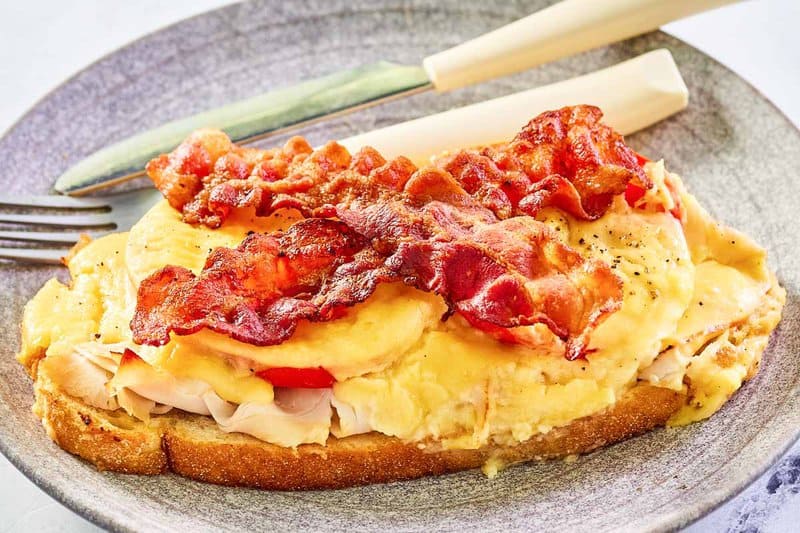
The photos I saw featured layers of freshly sliced turkey, bacon and tons of cheese sauce delicately layered over some toasted sourdough bread. Some of the photos had sliced tomatoes jammed in the cheese sauce. None had onion which I think I’m gonna add as a side to my west coast version along with adding a couple of thin slices of ham. The traditional version is excellent but you are welcome to try my version and let me know what you think.

I’m still thinking about a name for my version of this classic as I tweak this recipe. (The Venician, a Cheesy Bird Sandwich, Turkey Lava, Cheezy P, the Gobbler, the Boardwalk, etc.) It’s possible I may even create a version served in a roll or over macaroni or one with eggs and/or potato’s on the side.
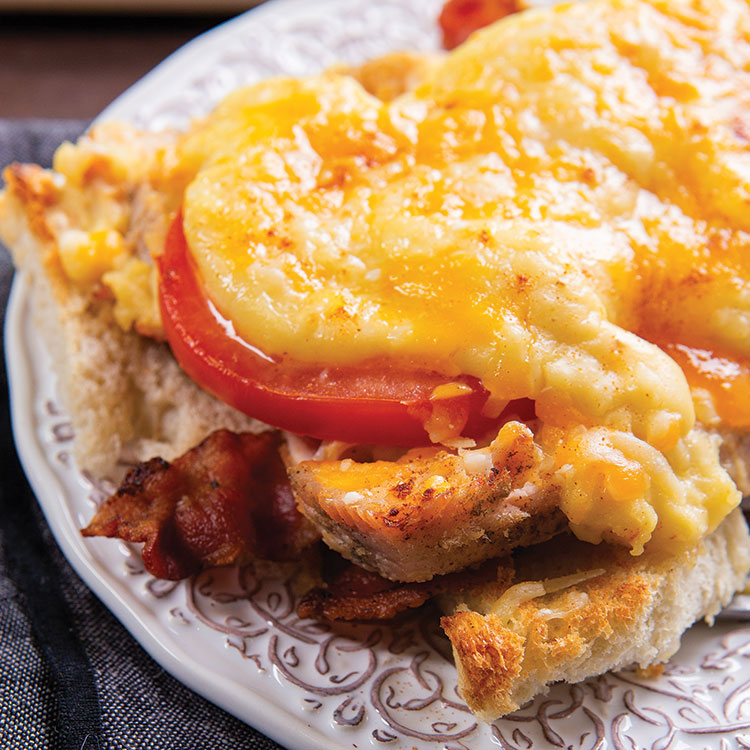
The Turkey Devonshire sandwich originated in 1934 in Pittsburgh, Pennsylvania. It is typically served as a hot open-faced sandwich on toasted bread with hot turkey, bacon, tomatoes and a cheese sauce. The sandwich is similar to a Kentucky Hot Brown, which it will be compared with in a future post.
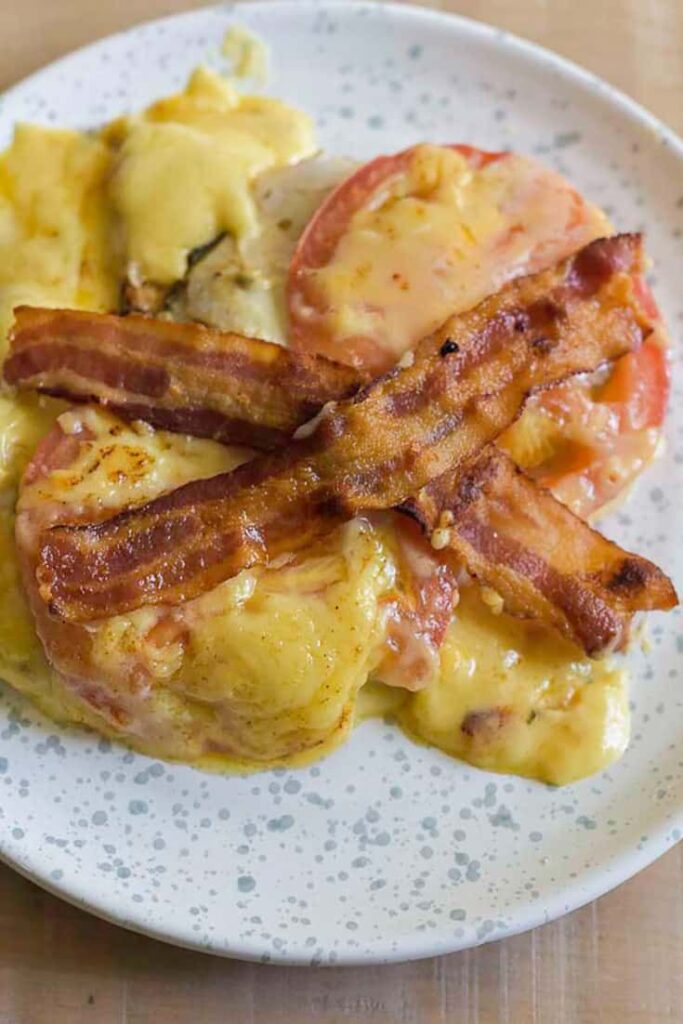
The Devonshire is credited as being created by Frank Blandi (1907-1999), a Sicilian American, who first served them at the Stratford Club located between Pittsburgh’s Bloomfield and Shadyside neighborhoods. The sandwich was named after Devonshire Street, located one block away. This sandwich was the local ‘go to’ in the 1960s and still remains a favorite 65 years later.

Some say this sandwich design was borrowed by the 21 Club’s popular chicken hash, which was a dish of diced chicken covered in Mornay sauce and then browned which leans towards the Kentucky Hot Brown sandwich.

Frank Blandi’s Original Devonshire Sandwich Recipe

Cheesy Cream Sauce

3/4 stick butter, melted
1 cup flour
1/4 lb cheddar cheese, grated
1 pint chicken broth
1 pint hot milk
1 tsp salt
a splash of Sauv Blanc      (optional)

Melt butter in deep pan and add flour, stirring constantly. Add chicken broth and then hot milk, stirring all the while. Add cheese and salt. Bring to boil, then cook slowly for 20 minutes, still stirring. Cool to lukewarm. Beat with wire whip until smooth before using. This makes enough sauce for 6 Devonshire sandwiches.

For each sandwich:

1 slice toast, crusts trimmed off
2 slices crisp bacon
4 thin slices cooked turkey breast
2 thin ham slices         (optional)
thick tomato slice        (optional) 
thin white onion slice    (optional)
sliced or shaved sharp cheddar
Cream Sauce
Melted butter 
Parmesan cheese and paprika 

Preheat oven to 450.

In an oven-proof casserole dish, place slices of toast and top with bacon slices. Add thin slices of cooked turkey breast. Cover completely with cream sauce. Sprinkle with a little melted butter, Parmesan cheese and paprika. Bake 10 to 15 minutes or until golden brown.

An alternate version could be prepared as follows;

Layer slices of white toast at the bottom of a casserole pan. Layer Turkey, ham and/or crab meat. Cover that with tomato, bacon crumbles, diced white onion and slices of cheddar cheese and stick it in the broiler to melt together.

Have fun with this versatile and creative comfort food dish and don’t be afraid to experiment and make it your own creative feast.

Bon appetit.

________________________________

Directions;

Fry bacon and remove from pan.
Drain.
Set aside.
Melt ¾ stick butter and add flour while stirring.
Add chicken broth.
Stir.
Add hot milk.
Stir.
Add cheese and salt.
Bring to boil.
Reduce heat.
Cook slowly for 20 minutes, stirring constantly.
Cool to lukewarm.
Whip cheese sauce with wire beater until smooth.
Place 1 slice toast in a casserole dish and top with sliced bacon.
Add slices turkey.
Cover with the cheese sauce.
Sprinkle with a melted butter, Parmesan cheese and paprika.
Bake 10-15 minutes until golden brown

Most writers who tried it with tomatoes recommended the addition, so I included them. I also took the liberty of adding sliced ham and onion and could possibly considering adding a few capers to this mix of flavors.

It wouldn’t be weird to prepare this dish on toasted English muffins or oven pop up rolls either.

Enjoy, the Dude of Food
Salted Cod aka Bacalhau, Portugal and Fishtory.

Did you know that Portugal consumes 20% of all cod fish caught on the planet?! Oddly, cod is not found in the waters surrounding Portugal but the fish is so popular that the Portuguese people have more cod recipes than there are days in a year! Portugal has long had a love affair with cod, especially salted cod or bacalhau. This fish is more than just good food to the Portuguese, it is a part of their culture and everyday life.

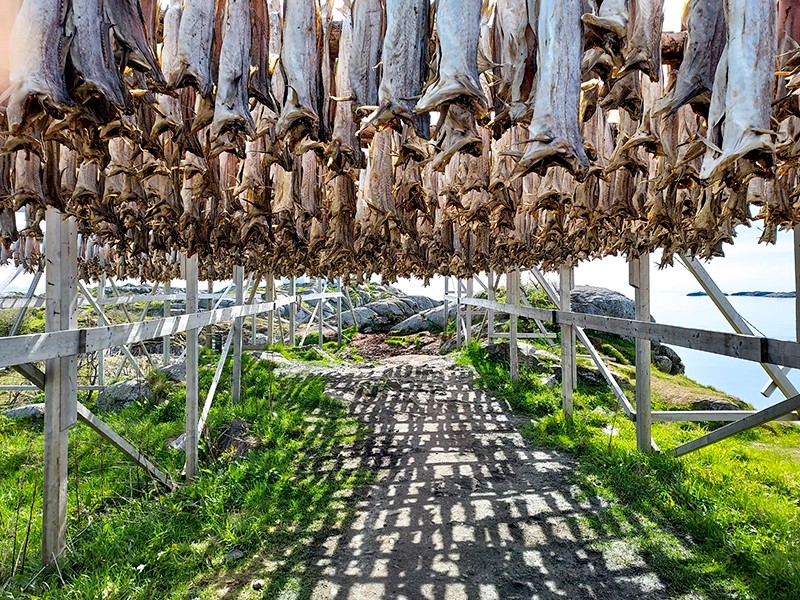
Cod air drying.

Cod was introduced to the Portuguese people by Viking nomads. The Vikings captured abundant amounts of cod in the cold seas off the Nordic countries and tried to preserve the fish by letting it dry in the open air. During the Middle Ages the Vikings began preserving their cod with salt, which they learned from the Romans and the Basque. The Vikings obtained salt from Portugal and traded for cod for it. The Portuguese had plenty of salt to sell and cod fish became a solid source of food amongst the Portuguese people.

Meat was expensive in Portugal during these times and supplying fresh meats and fish to the interior of the country was a complicated task. Salted cod was an easy and inexpensive food alternative that was easier to transport and provide throughout Portugal. Salted cod also had a shelf life much longer than un-refrigerated fresh meat. This kind of exposure plus its nutritional value and likeable flavor made cod a popular thing to eat.

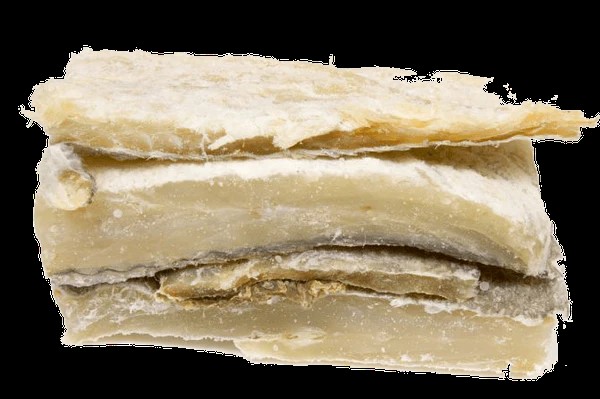
Dried Salted Cod

In the mid 1500’s a Portuguese expedition heading to India saw Newfoundland for the first time and a Portuguese cod fishing base began. The Portuguese fishermen were eventually driven away by the English and French corsairs that dominated the fishing activities in the region during these times.

Cod fishing was a hard and dangerous job. These fisherman led a life of sacrifice, as cod fishing was done the traditional way. Sailing from Belém, Lisbon, the cod fishing ships were luggers and sailing ships, which towed dories used for line fishing and had the capacity to carry between 900 and 950 tons of cod. The fishermen were forced to row away from the main ship, sometimes two or three miles, to manually fish with lines and hooks. Each man fished alone for hours until their small boat was full of cod. While fishing they encountered freezing winds, fog, strong waves and icebergs. Some didn’t make it back to the fishing ships and were lost at sea. If they did make it back to the ship they would then unload, scale and salt their catch making for even longer work days.
After reaching land, the fish was washed to remove all the salt and dried until completely dehydrated. The codfish drying process took place outdoors on the South Bank of the Tagus, in Setúbal, Figueira da Foz, Aveiro and Viana do Castelo.

On the 9th of July 1920, the Portuguese Fishing Company was founded by four small shipowners. They set up headquarters in the old facilities of the Lisbon Company Cotton Factory in Olho de Boi, Almada. In an attempt to reduce foreign dependency and guarantee the country’s food supply Portugal’s leader, Antonio Salazar, made moves to centralize, organize and create cooperatives and cartels that handled the fish supplies which became the famous Codfish Campaign in 1934.

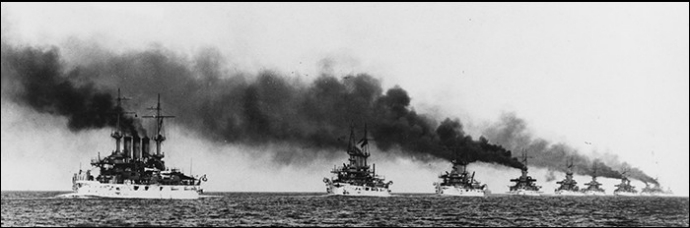
During World War II, Portugal maintained its fishing activity. While crossing the Atlantic Ocean, two cod fishing ships, ‘Maria de Gloria’ and ‘Delães’ were sunk by Nazi submarines. An agreement with the Allies would state that these Portuguese cod fishing ships be painted white to signal Portugal’s neutrality in the conflict and allow them to safely sail the Atlantic, thus becoming known as the ‘White Fleet’.

White Fleet at sea

In 1957, Portugal was already the largest salt codfish producer in the world and peaking. By this time, wheat and codfish were the commodities with the greatest impact on both the country’s diet and its trade balance.

The last three large cod fishing ships set sail for Newfoundland for the last time in 1974, coinciding with the fall of the dictatorship and the peaceful revolution of April 25th which brought democracy to the country.

The Portuguese still love codfish today and it is now claimed they have 1001 ways of cooking it. Presently, 70% of codfish comes from Norway and the Portuguese are always taking sustainable consumption, climatic change and versatility into consideration.

SALT FACT: Portuguese salt (Flor de Sal) is internationally popular and is similar to French salt (Fluer de Sel). Portuguese salt is collected from evaporation pools of sea water like they do in Nicaragua. With an area of 360 hectares or just under 900 acres, the Samouco Salt Pans in Alcochete were the main source of salt farming near Lisbon.

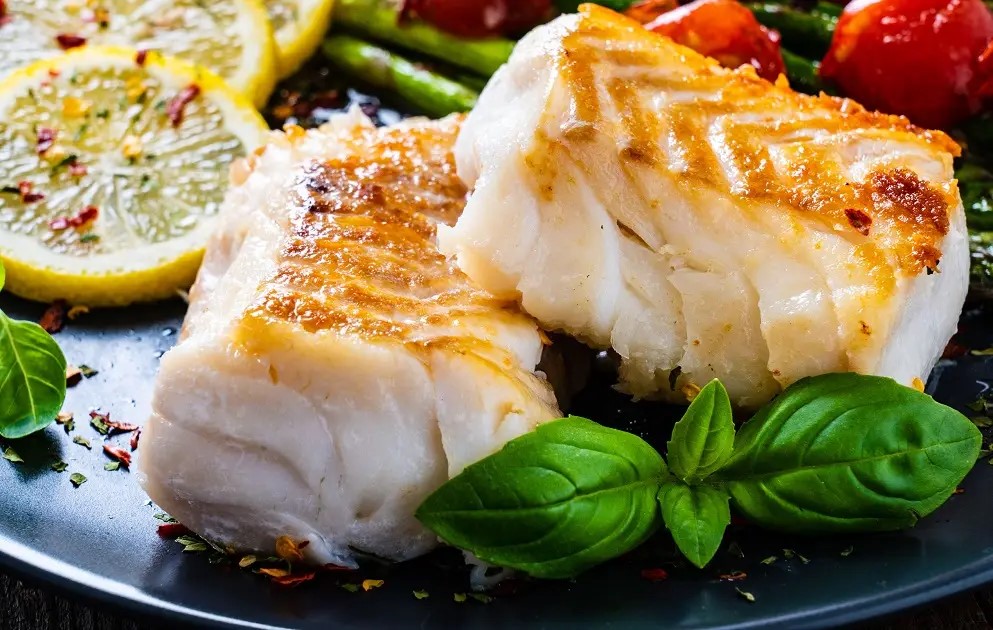
Cooked Cod: internet photo

Did someone say Chicken Cacciatore?

The old adage about ‘nice guys finish last’ comes to us from the world of baseball by Brooklyn Dodgers manager Leo Durocher in 1946. In the cooking world it’s a bit different as a nice dish can finish first and be very popular among restaurant eaters. Having just returned from 2 weeks of hell in the Pacific Northwest I was craving a nice, easy home cooked meal and decided a chicken cacciatore style plate is what I’d like to eat to bring some joy back into my life.


Many things in life start with desire and once I set my taste buds on this plate my mind focused and this dish was easy to pull together.


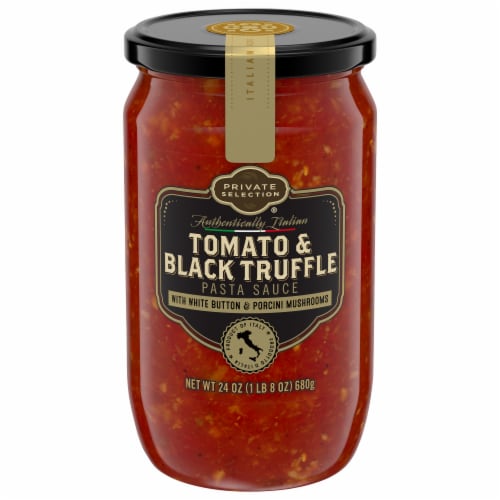
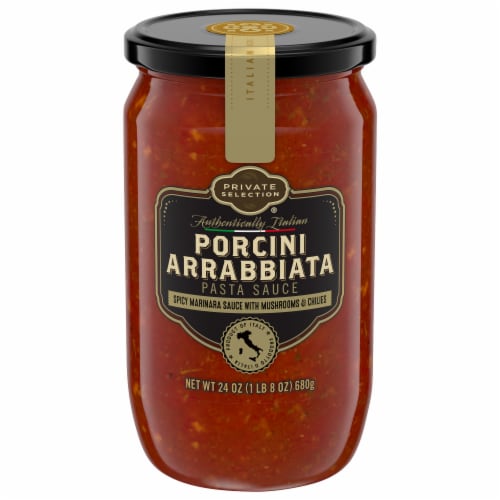
Sauce is a big part of a pasta dish and making a good one from scratch usually takes the better part of a day or a second day to have it set right. The Dude of Food believes that sauce is always better the second day. I decided to cut corners and use Private Selection sauce made in Italy and distributed by Kroger of Cincinnati. I actually used 2 jars of sauce. The first jar was Porcini Arrabbiata and the second jar was Tomato and Black Truffle.

Below is the simple ingredient list and procedure for preparation.

Kroger Private Reserve sauce – 2 jars
1 Porcini Arrabbiata and 1 Tomato Black Truffle
1 chopped yellow onion
6 chopped garlic cloves
1 tray of rubbed chicken: 8 legs
salt
pepper

Mushrooms, grated carrots, celery, olives or any other favorites are ingredients that could also be added to this dish.

Start by chopping up the onion and garlic. Put a small amount of wine in a pan and warm. Once the wine has warmed, the alcohol will lift. Then add a little olive oil into the pan with a touch of butter, salt and the onions. Simmer the onions on low to medium heat. When the onions begin to clear up add the garlic and let them warm up together. Once the garlic has had a chance to expand and release its flavor it’s time to add the 2 jars of sauce. Stir, cover and let simmer on a low heat, stirring occasionally.

As the sauce does its magic it is time to start heating the rubbed chicken. Get another pan and add a small amount of olive oil and a touch of water and heat. As the pan heats add the 8 rubbed chicken legs, lightly salt and cover. Pan fry the chicken on stove top over low to medium heat. You are trying to heat the chicken thoroughly but not overcook it or dry out. Low and slow is the way to go.

Time to check the sauce and stir.

Next add a pot of water to the stove top to boil the pasta and begin to heat. Salt can be added to this water if you salt your pasta water. Some folks do.
Boil enough water for 1lb of fettuccine or your favorite noodle shape.

Now you have all the moving parts working and it’s time to clean up as you monitor and stir the heating pans.

The noodles will be ready first. Drain the pasta and add a little of the starch water to the sauce. Cover the drained noodles and let sit.

Once the sauce has simmered enough to be considered ready and the chicken is cooked enough to eat turn all of the heat off and prepare to plate these items.

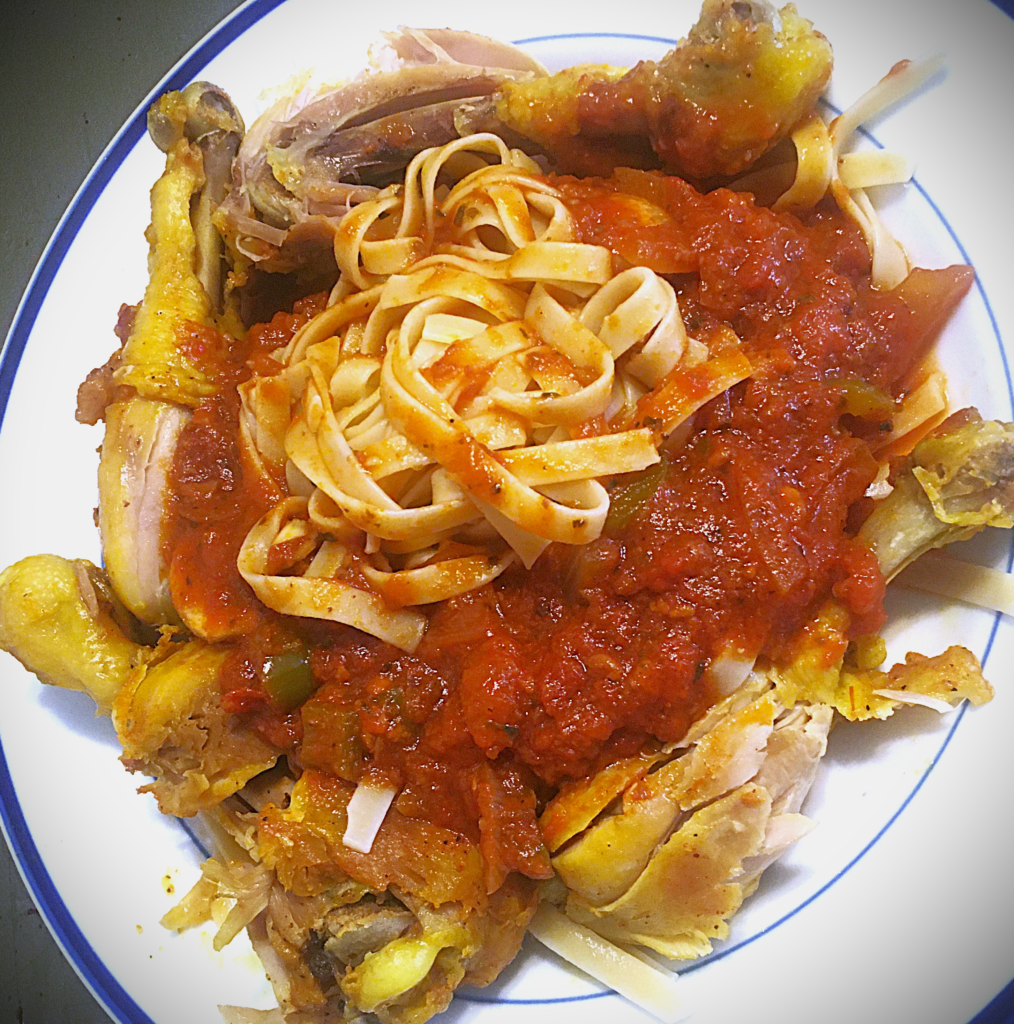
Start by adding a lump of pasta in plate center.
Surround pasta lump with chicken legs.
Scoop sauce over noodles with plenty for the chicken too.
Sprinkle the top with grated Parmesan cheese and serve.

Bon appetit.

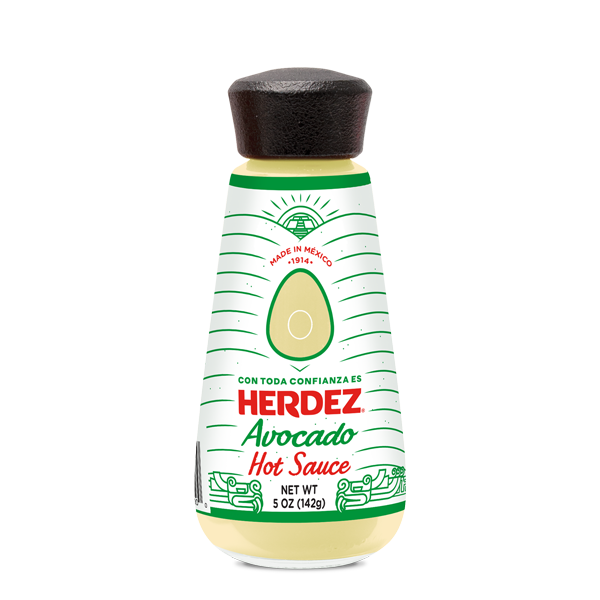
Herdez Avocado Hot Sauce is bueno.

Herdez 5 0z Avocado Hot Sauce

The Dude of Food can’t remember where he crossed paths with the Herdez sauce representative but when he did he was given a few bottles to try by the agent.
Since I had a couple bottles to play with I tried experimenting and discovered that this product is a great addition to my Croc Pot with a pork roast and some onions. After a few hours of slow cooking you’ll pull the top off the Croc Pot and discover you have a pretty amazingly concocted Chile Verde. When the Dude of Food tasted this product he realized that this little bottle of green sauce contained a kick.

The avocado hot sauce can simply be used as a dip for tortilla chips but is pleasantly spicy and might be too strong for some on its own. Splashing some hot sauce into freshly crushed avocados works well. Spooning some into a fondue or as a side dip next to a plate of chicken nachos or chicken fingers would also be good options.

Herdez did well when they came up with this product. If you click on the image or Herdez name you will be redirected to Amazon to where you can purchase your own.

Enjoy, the Dude of Food
Eggs, bacon, eggplant and potatoes for breakfast.

It’s not very often that you see eggplant on your breakfast plate but the other day that is exactly what happened. I had some eggplant and potatoes left over from the night before. I cooked up some bacon, wiped the grease and heated the left over eggplant and potatoes in the same pan. Next, I fried up a couple of eggs and ending up making a hearty and delicious breakfast as seen above.

Using leftovers is a fun thing to throw in your breakfast recipe mix. In the past I have warmed up Chinese food from the night before and scrambled a couple of eggs into it. Another cool thing is scramble up some eggs and throw them on top of slices of warmed up pizza from the night before.

Eggs have been in the diets of humans for many centuries. Records from India show that by 3200 BC wild birds were captured and kept for their egg production. Roman soldiers would eat deviled eggs for snacks and a popular dessert was fried eggs with honey in Rome. Ancient Egyptians ate ostrich eggs.

Interestingly, Sigmund Freud’s nephew, Edward Bernays, is credited with the introduction of bacon and eggs into the American breakfast diet after consulting doctors and confirming that eating a big breakfast is better for people.

Lastly, I grew up with chickens in the yard so we always had fresh eggs with dark orange yolks for breakfast. My mom would fry an egg and put it on toast like the photo below from Charlotte’s Lively Kitchen.

Make sure you eat a decent breakfast. It doesn’t need to be extravagant, expensive or full of sugar. Chickens provide eggsactly what we need.

Bon Appetit, the Dude of Food
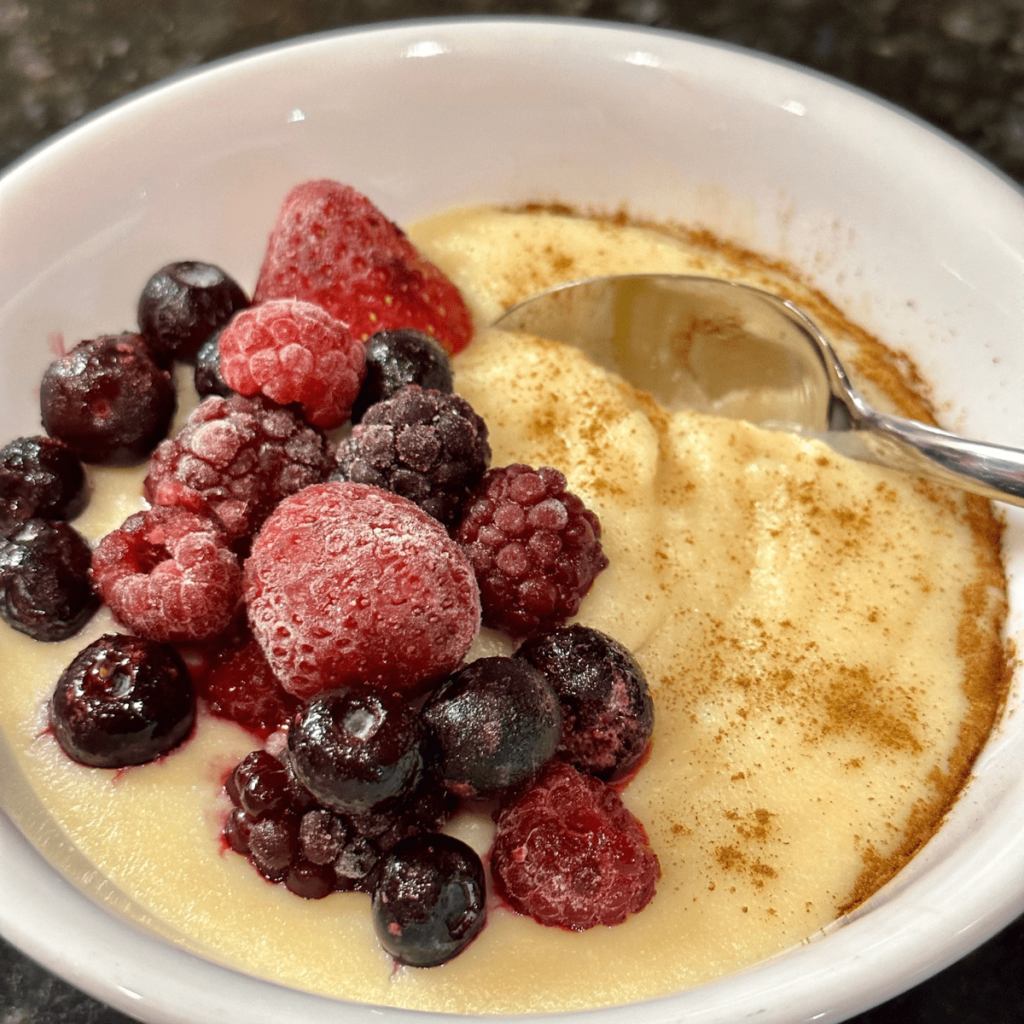
Griesbrei is a deliciously good food.

My job in the past allowed me to work with the Germany’s Next Top Model crew and Heidi Klum for 9 years. We spent about 3 months a year together and it was always interesting and fun. Heidi is super cool as was the German crew. It was a blessing to be part of a production team of friends. We had much fun working and partying together.

During that time my travels took me to Munich to visit my friends and it is always a joy to be with them in their city.

On my first trip to Munich I found myself attracted to the markets. Lidl, Rewe, Aldi and Edeka were my favorites. The lighting, the prices, the choices, the stern checkers, it all caught my eye. I’ve been back 5 times and always look forward to walking around the markets.

As I wandered around the market on that first trip looking at stuff on the shelves I ended up purchasing something I thought was like German breakfast grits called griesbrei. It was a product made by Dr. Oetker. I bought a few and made it for breakfast at home in Los Angeles, after decoding the instructions. I loved it.

When I told my Bavarian friends about how I loved griesbrei I always got the same odd reaction. They would get a weird look on their face and say to me, ‘so you like baby food?’

Well, I guess I do. Griesbrei is good. It’s sort of like grits but also reminds me of when I was a kid and my grandmother used to make me tapioca pudding for dessert and I always loved that too. She also would make homemade ice cream in a bucket with salt rocks and ice, but I digress.

Ingredients

3 ⅓ cups milk

½ cup soft wheat semolina

2 tbsp. sugar

1 tsp. vanilla extract

1 pinch of salt

1 large egg

1 tbsp. butter

Add milk and sugar to a sauce pan, mix well and bring to a light simmer.
Gradually add the semolina while stirring.
Bring to a light simmer, cover with a lid and remove from heat.
Allow to sit for about 5 min.
In the meantime, separate the egg.
Beat the egg white with a pinch of salt until stiff peaks form.
Add the egg yolk to the semolina pudding and mix well until fully incorporated.
Stir in butter and vanilla extract.
Fold in the egg white.


You can get your package of Dr. Oetker’s Griesbrei by clicking here.

Pasta Carbonara is awesome.

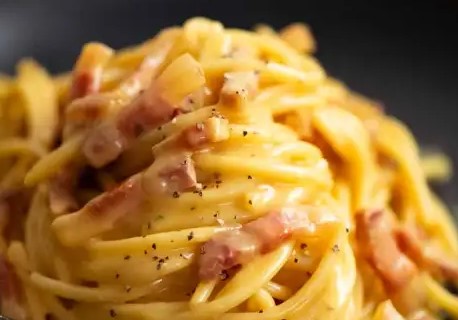
Carbonara is a popular dish throughout the world. Luca Di Leo from Barilla pasta says, “One of the great traits of pasta is its extraordinary versatility. You can combine it with pretty much anything. A carbonara base allows one to create different variations from experimenting from a roasted artichoke to sautéed shrimp. You can also make a great variation of carbonara with spices different from black pepper. Carbonara is a truly global recipe which can help bring people together.”

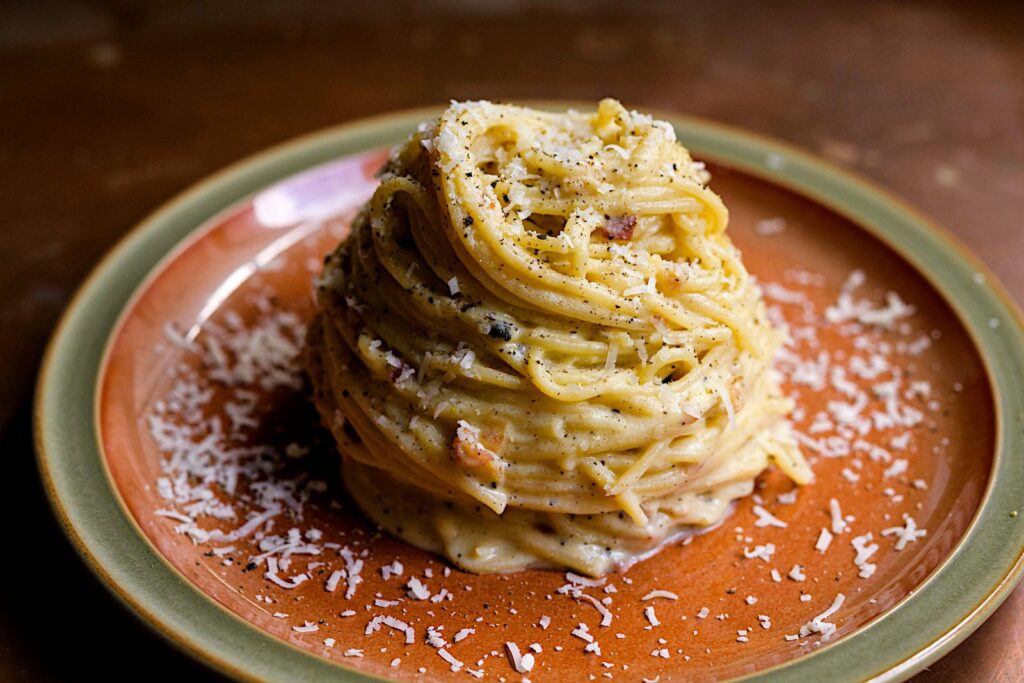
Carbonara di mare or seafood carbonara is an Italian beach favorite. For instance, in place of cured pork, 3 star Michelin chef Mauro Uliassi substitutes virtually anything that swims; smoked trout, small raw clams and even canned tuna.
Norbert Niederkofler, another 3 star Michelin chef famed for his “Cook the Mountain” concept, created Tyrolean Carbonara. His version features Italian Alp ingredients including leeks, Malga cheese, dehydrated speck powder and spelt flour fusilli. No beaten eggs appear in his version but he does put one whole yolk on top of the hot seasoned fusilli.

Italians might embrace variations but there are limits. A national food crisis arose when the French attempted to reinvent carbonara as a quick one-pot meal. This ordeal became “Carbonaragate” and sparked outrage and an international debate among Italian food writers, bloggers, chefs, home cooks and pasta makers. A video demonstrating the French style carbonara was viewed by more than a million Italians. They were appalled to witness bow tie pasta cooked in the same pan as diced bacon and onions, finished with crème fraiche and an unidentified cheese. Lastly this mix is topped with a raw egg and parsley.


2 star Michelin chef, Marco Sacco, says “In the kitchen, the protection and care of tradition must be able to coexist with the desire and the possibility to innovate and experiment. The original recipes must be defended and preserved, just as an artistic asset is protected in a museum or a UNESCO site. But this does not mean that maximum freedom should not be given to experiment, innovate or adapt to the territory with new ingredients. After all, it is just food. Various lands offer various cultures and preparation techniques can differ just like people do.”


Traditional Carbonara Recipe
Ingredients


12 oz of spaghetti
7 oz of guanciale
4 whole medium eggs (1 egg per serving)
1 cup + 1 tablespoon of grated Pecorino Romano
ground black pepper

Step 1 – Boil the water for the pasta while you prepare the carbonara sauce. Remember: 4 cups of water for every 3.50 oz of pasta and 1/2 tablespoon of coarse salt per 4 cups of water.
Cut the guanciale into small pieces and cook in a skillet over medium heat for about 2 to 3 minutes. Stir occasionally so that it cooks evenly. The more the guanciale cooks, the more its fat will melt and its meat will become crispy. The level of crisp is up to you. Some people like their guanciale well cooked and others prefer it soft.
No need for oil: guanciale is already fatty, oily and fabulous on its own. If you want, you can add a tablespoon of cooking water and emulsify. This will create a great oily sauce to season the spaghetti nicely. When it’s ready, turn off the heat, cover with a lid and set aside.

Step 2 – Prepare the cream. In a bowl put the eggs and pecorino Romano cheese.
Use the whole egg. Pecorino Romano, the only cheese that is recommended for making carbonara, is a very salty and flavorful Italian cheese so there is no need to add salt.

Step 3 – Add freshly ground black pepper and mix quickly until you have a creamy sauce.

Step 4 – This egg and pecorino cheese sauce should be quite thick. Set it aside for the moment.
The water should now be boiling so add the salt and cook the spaghetti. If you chose a fairly large pot, the spaghetti should fit comfortably without breaking them. Whole, unbroken spaghetti is best, so you can more easily roll them around on your fork.

Step 5 – Drain the pasta when ready. Then place them in the skillet, over high heat, to season well with the guanciale.
At this step, we have reached the crucial moment of spaghetti carbonara. Not to put tension on it, but this is the fleeting moment in which you can make an immortal dish or one that will be a real failure. So now you have to be quick, ready and dexterous. Here’s how:

Step 6 – When the spaghetti and guanciale sizzle in the pan, TURN OFF THE HEAT, otherwise the eggs will overcook and you’ll end up with scrambled eggs and pasta!
Now quickly add the eggs and pecorino cream to the hot pasta and stir. The pan is not too hot, this way the eggs will cook without lumps. Pay attention to the consistency, which should be creamy, not runny. If you notice that your carbonara is too runny, add some grated pecorino cheese. On the other hand, if you see that it’s too sticky and dense, add 1 or 2 tablespoons of pasta water.

Step 7 – Carbonara is ready. With the help of a ladle and a fork, create a pasta nest and place it on a plate.

Step 8 – Top with what’s left of the guanciale, freshly ground black pepper and grated pecorino romano to taste.


There are many quality recipes online. Check these sites out to get started.

https://www.177milkstreet.com/recipes/roman-spaghetti-carbonara
https://skinnyspatula.com/tagliatelle-carbonara/
https://www.recipetineats.com/carbonara/
https://recipe30.com/french-spaghetti-carbonara.html/

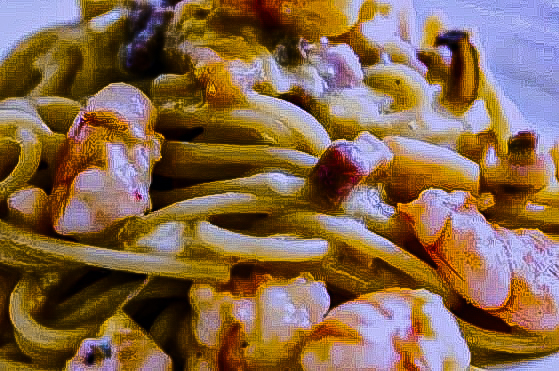
Seafood carbonara art rendition by p3

Bon Appetit, the Dude of Food

Historically delicious: Santa Cruz Chili & Spice Co

The boss of a film crew I was working with gave the 7 member’s of our team thoughtful homemade gift bags for Christmas.
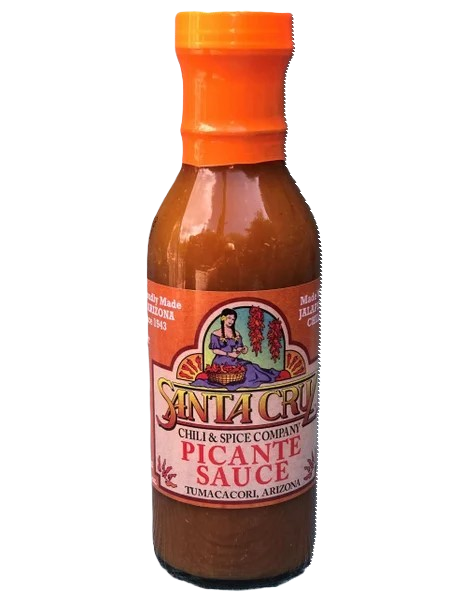
One of the cool gifts in my bag included a bottle of Santa Cruz Chili & Spice Company Picante Sauce.
When used in a dish I discovered this product was pleasantly surprising and complimented the dish nicely. The flavor was unique and delicious. The bottle information said the company and sauce were located near my mom. I asked mom if she was familiar with this brand of sauce and she said she knew the brand and told me the family was a well respected part of the local business community. It turns out the granddaughter of the founders of Santa Cruz Chili & Spice Co and my mother had met her at an event somewhere in town in the past. My mom confirmed that the granddaughter was a very nice lady whose name is Jeanie England Neubauer.
Jeanie is the granddaughter of an international business agent named Beck Kibbey. Jeanie has done a great job maintaining the business her parents and another couple began in 1943. Her family roots are deep and have ties with the towns of Nogales, Arizona and across the border in Nogales, Sonora, Mexico.
Her family history is amazing and the Anaheim chili became their friend. Gene England, Jeanie’s grand-father, had developed methods to stew and grind chili’s to make paste. They also ground chili pods down into powder for seasoning.
The folks at Santa Cruz Chili & Spice Co still support the family traditions of the founders and have employees generations deep maintaining these traditions.


Go visit their web page. https://santacruzchili.com/

The online sales page will show you the various sauces offered. Other pages will show that these folks support some really cool causes.
If you are near the Tucson area and headed to the Mexican border you can go visit the Santa Cruz Chili & Spice Co gift store in person which is located a few minutes south of Tubac. The drive from Tucson is roughly 60 miles and if you love chili, then it’s well worth the trip.

Santa Cruz Chili & Spice Company
1868 E. Frontage Road, Tumacacori, AZ 85640

520.398.2591
520.398.2592 Fax

Store Hours
8:00 am – 5:00 pm
Closed Sundays and holidays.

Muchas gracias Santa Cruz Chili & Spice Company

https://santacruzchili.com/

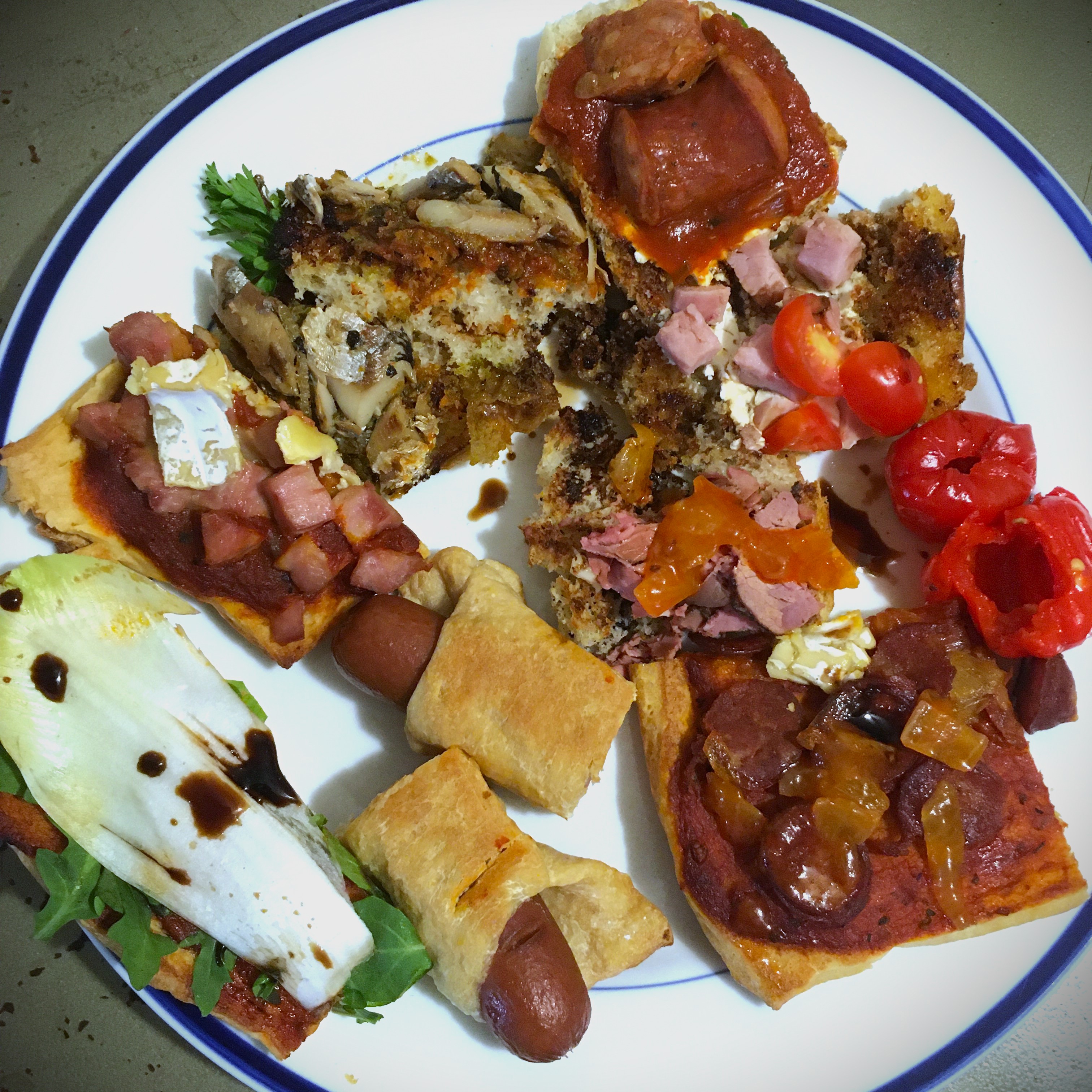
“Create tapas and you create joy!” the Dude of Food

photo: @p3_stuff
Tapas photo: @p3_stuff on Insta

This form of eating called Tapas can be traced back many moons to when bar owners used salty meat strips to cover drinks to keep the flies from swimming. The salty meats promoted thirst amongst the patrons and drink sales thrived. Soon the drink covers became other salty creative snacks and a bar culture of food was born. Spain gets most of the credit for this type of nourishment as many of the ingredients used in creating these food gems are found abundantly in their region.

This salty sales theory is why in the 70’s and early 80’s many bar owners in the US offered free peanuts to bar patrons. Peanuts were cheap and salty and the President (Jimmy Carter) was a peanut farmer. Jimmy’s brother Billy was a famous beer drinker. See how these things go together!? The cool thing was back then that many places just let you throw the empty peanut shells on the floor like at a hockey game.

The Dude of Food was really impressed with the tapas in Donostia/San Sabastian. While visiting this beautiful Basque city many great items were discovered. I stumbled upon a place named Bar Desy that invited me to try tons of great foods including an extensive tapas menu. I went back to Bar Desy a bunch, sometimes 3 times a day, for the next week. The staff was really great and I even met the owners father.

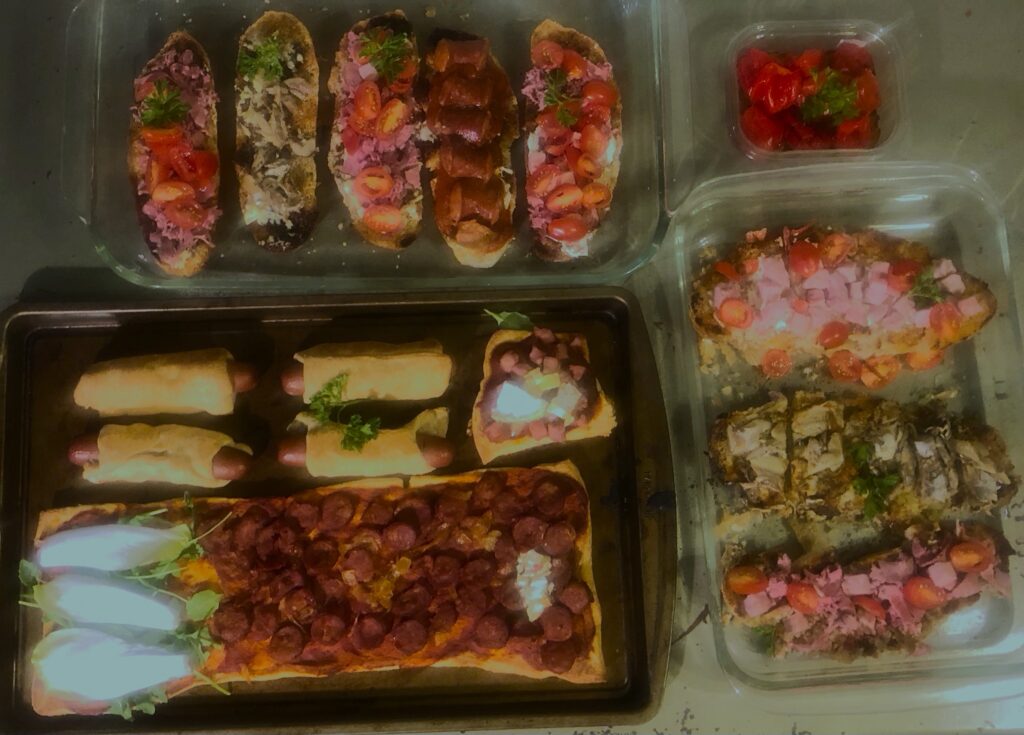
The top photo is one I took after I created a few tapas for my Brazilian girlfriend to enjoy while listening to some Samba and sipping on wine. We would look deep into each others eyes and share moments that made the world outside go quiet. Love was in the air. I digress.

Anyways as stated, the Dude of Food created the above pictured tapas. On the various breads are oil, cheese, meats, tomato sauce, veggies, sardines, salt and herbs. Tapas are fun to make, great to share and super enjoyable to eat.

Below was my first pass by the home made tapas table.

Don’t be afraid to try this style of eating. Combine some of your favorite flavors and enjoy some tapas soon.

Bon Appetit, the Dude of Food

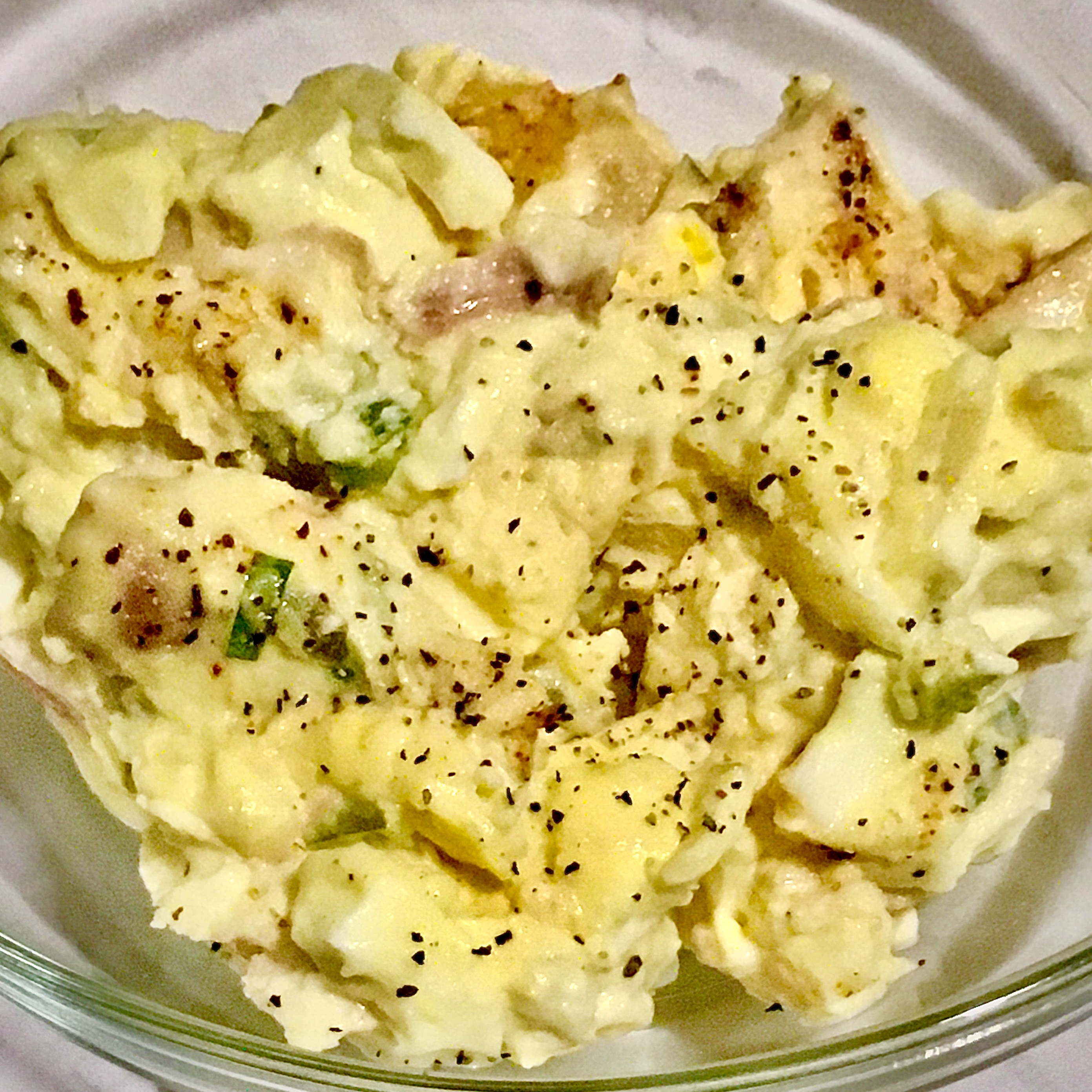
“Egg, chicken and potato salad is a delicious ‘super food’.” the Dude of Food

Body builders, fighters, athletes, nutritionists, historians, chefs, archivists and intelligent eaters everywhere all agree that eggs and chicken are good sources of protein and carbs are good for a body in motion. This group also would agree upon the fact that vegetables are good for folks. So when I mixed eggs, chicken, potatoes, celery and onions together, I made a super food. The recipe ingredients follow at the end of article.

Super Food photo: p3

I started by peeling, cubing and boiling 3 potatoes in salted water. I love my Oneida knife. I’m not endorsed by them but this knife and I have grown together in the kitchen and we both try to look good while staying sharp.

You can add steamed peas to the mix if you desire. If so now is the time to retrieve them from the freezer and steam a cup full of them. Once steamed, cover and let sit.

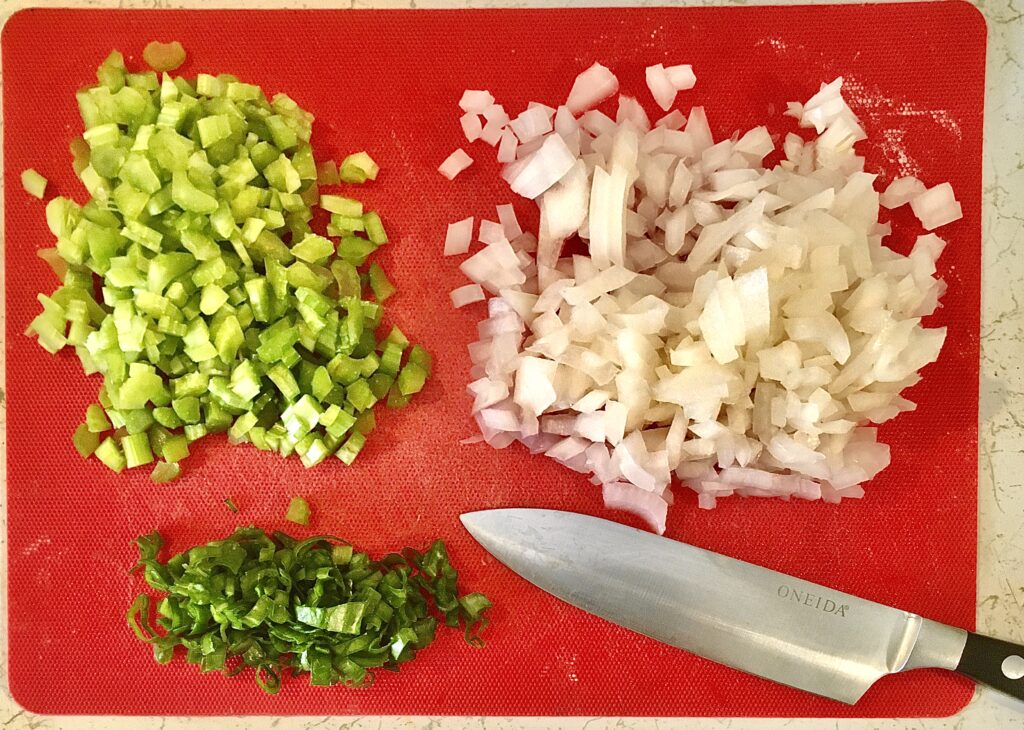
Celery and onion

Next, time to chop the onions and celery, while warming the potatoes in water. I like to leave the onion a little chunkier and dice the celery up pretty small as you can see in the photo.

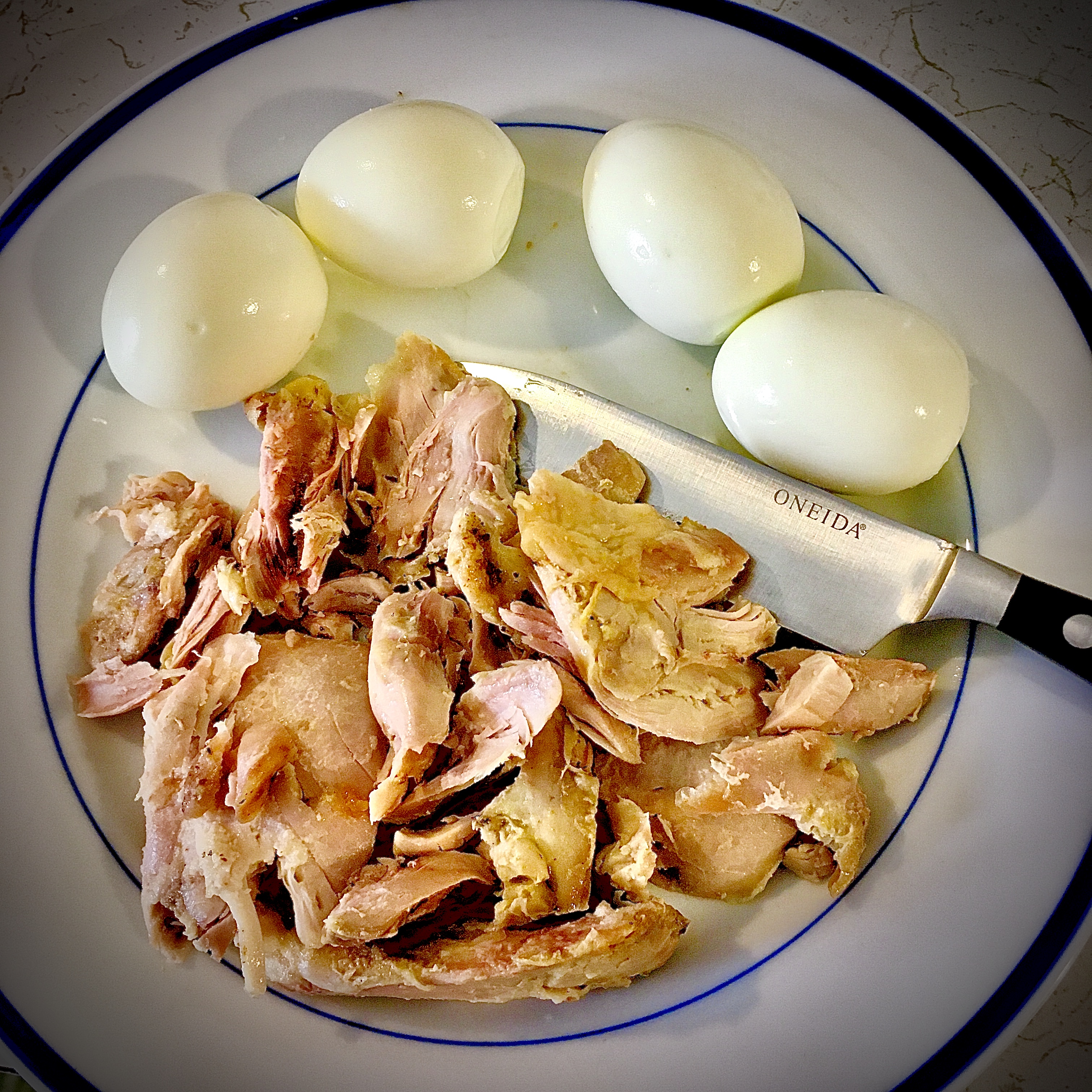
Peel and chop up the hard boiled eggs.

Remove the meat from the precooked chicken thighs.

Love my Oneida knife

Once the potatoes are cooked you need to drain them and return them to the hot pan. Add the chopped onions, celery, eggs and chicken to the warm potatoes. If you are adding peas, drain and add them now. Stir in the mayo, mustard, vinegar, relish and spices. No need to stir hard or use mixer as the potatoes are soft and will become mashed if you mix vigorously. It’s not bad, as some may prefer the texture, but personally I like the potatoes to maintain some of the cube shape. The taste is the same.

Once mixed you can enjoy warm with crackers or cool in fridge and enjoy in lettuce bowls or between toasted sourdough slices in the morning with a slice of cheese. It’s a bit like tapas and goes great with wine, anti pasta salads, appetizer trays, breakfast, snacks and parties.

Now getting back to the nutritional status of being called a ‘Super Food’. I think it certainly qualifies for the title as it tastes ‘Super’. The Dude of Food fully approves and recommends trying this. This new super food group deserves an all stars available rating and a Golden Fork Award if there any are to be given.

3 large gold potatoes
4 hard boiled eggs
4 chicken cooked thighs
3 chopped celery sticks
2 chopped green onion stalks
1/4 chopped white onion
3 spoon fulls of mayonnaise
3 circle squirt of yellow mustard
1 spoon full of dill relish
2 cap fulls apple cider vinegar
Add salt, pepper, paprika to your taste.

Additional options could include but certainly not limited to: avocado, peas, sour cream, ranch dressing or raisins. If you add grapes then we probably aren’t friends.

Enjoy, the Dude of Food