Historical Fact: In 1799, George Washington’s distillery produced nearly 11,000 gallons of whiskey, making it one of the largest distilleries in America. This national desire to create led many other folks to working on perfecting their blends. Maker’s Mark, created by the Samuels family, became one of these new blends.
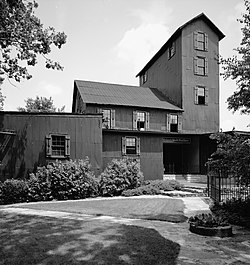
Maker’s Mark historical distillery.
Irish and Scottish immigrants came to America and began to brew in the US with local ingredients using the methods of their traditional ways.
During the planning phase of the Maker’s Mark recipe, seven potential mash bills were developed by the Samuels family. As there was no time to distill and age each one for tasting, a loaf of bread from each recipe was made and the one with no rye was judged the best tasting. The Samuels’ also received considerable help from Stitzel-Weller owner Pappy Van Winkle, whose distillery produced the wheat made Old Fitzgerald and W. L. Weller bourbons.
The civil war ended, but a Confederate band of rebels still lingered, headed by William Quantrill. 2 of the rebels in Quantrill’s renegade gang were the James brothers, Jesse and Frank. The James brothers were cousins of the Samuels family who started Marker’s Mark. On July 26, 1865 Frank James handed over his gun to Ora Samuels on the porch of the old Samuels distillery. Frank’s pistol is still there.
Maker’s Mark is one of a handful of American-made whiskies. It’s family history of distillers goes back 7 generations. It uses the Scottish spelling style “whisky” rather than the predominant American ‘whiskey’ spelling.
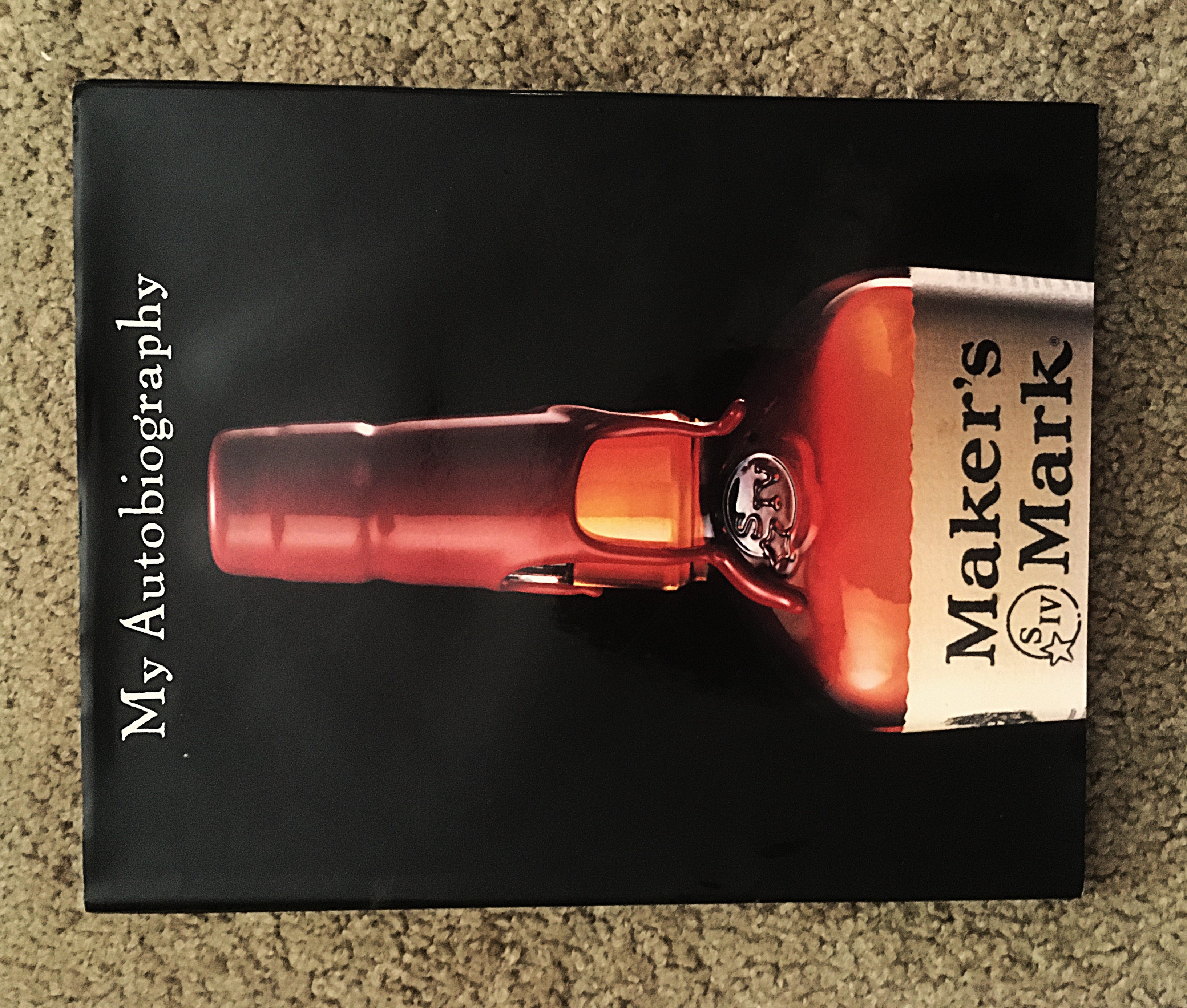
The cover of the Maker’s Mark autobiography is shown below, and is an interesting read.
A family history.
I became familiar with this brand when they donated a bunch of cases for product placement for the making of the film, ‘Climate For Killing’. One of the local girls in the production office and I would make Maker’s and Cokes after work in her room.
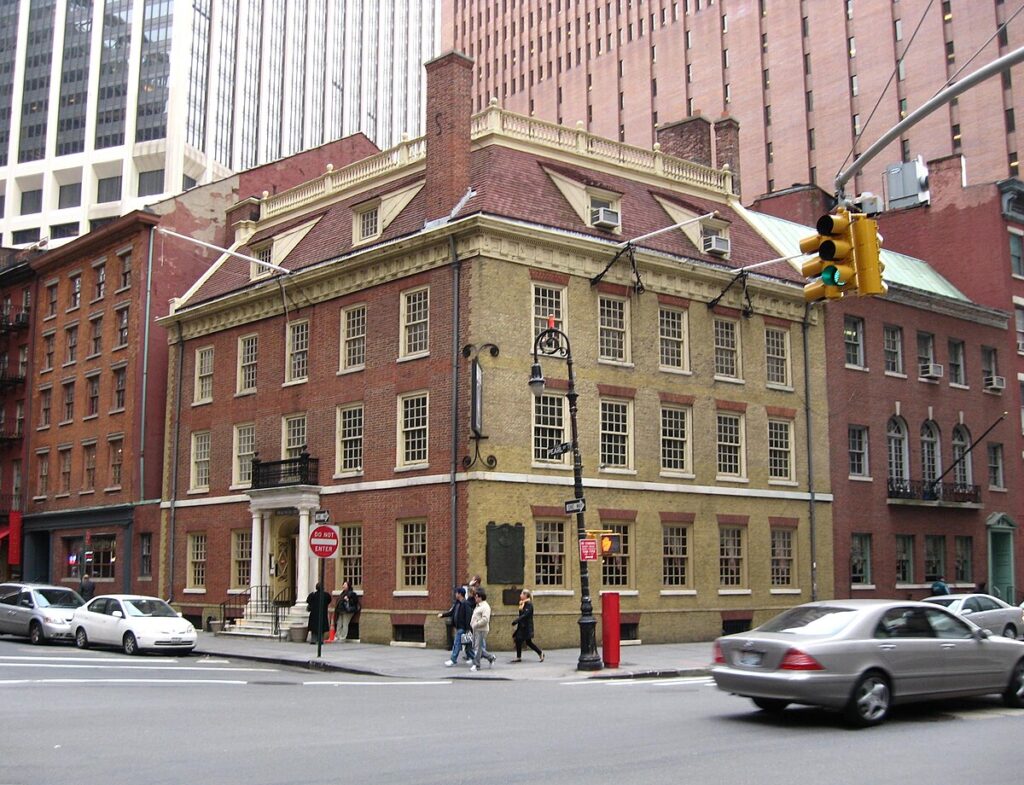
It is certainly no secret that people like to gather in friendly surroundings to enjoy food and drink. This behavior dates back well before the Roman Empire and Cleopatra’s famous feast. One thing you might not be familiar with is the oldest gathering spot in Manhattan, NYC. This distinction goes to a building located on the corner of Pearl St. and Broad St. in the Financial District of Lower Manhattan.
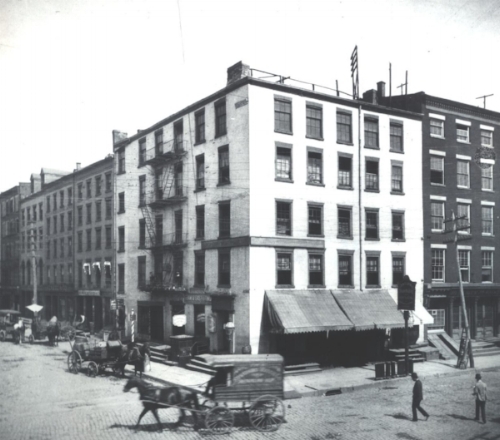
The plot of land that is 54 Pearl Street (a landfilled water lot) was purchased from the city by Stephanus Van Cortlandt in 1686. Stephanus Van Cortlandt’s daughter, Ann, married a young French Huguenot merchant, Stephen (Etienne) De Lancey in 1700 when De Lancey purchased the lot from his father-in-law.
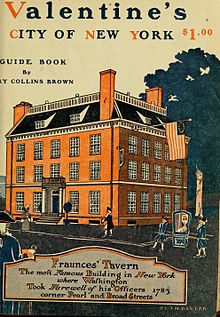
In 1719, De Lancey applied to the Common Council for three and a half more feet to be added to his plot of land on the northwest corner where he planned to build ‘a large brick house’. The large brick house has gone through some changes since but has been a private residence, hotel and one of the most important taverns of the Revolutionary War.
The Provincial Congress hosted a banquet in the Long Room at the tavern on June 18, 1776, for General George Washington, his staff and his officers to express their gratitude for the defense of the colony. The party raised 31 toasts throughout the evening, starting with the Congress and the American Army and ending with “Civil and religious liberty to all mankind.” It was a party and officers sang campaign songs while music played. The final bill presented by Samuel Fraunces, totaling £91, included 78 bottles of Madeira, 30 bottles of port and 16 shillings for “wine glasses broken.” Fraunces Tavern served as a headquarters for George Washington during peace negotiations with the British and housed a few federal offices of the Early Republic.
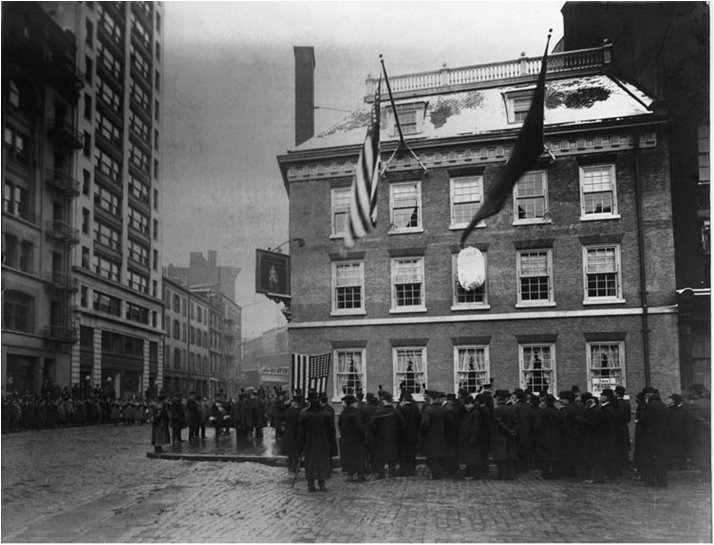
British troops evacuated New York on November 25, 1783. This day is historically known as ‘Evacuation Day’. George Washington led his Continental Army in a parade from Bull’s Head Tavern in the Bowery to Cape’s Tavern on Broadway and Wall Street. New York Governor George Clinton’s Evacuation Day celebration was held at Fraunces Tavern. In true American fashion, Evacuation Day was celebrated for a week. George Washington was in Manhattan and made use of Fraunces Tavern by dining in and ordering take-out.
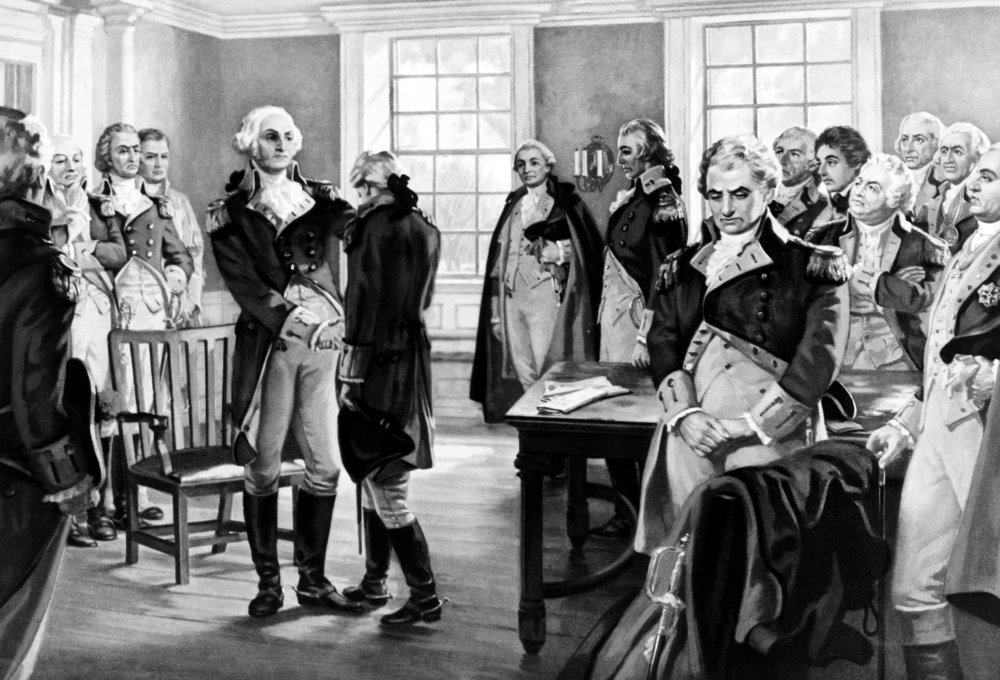
General Washington meets at the tavern
A week later, on December 4, 1783, the tavern hosted an elaborate ‘turtle feast’ dinner, in the building’s Long Room for George Washington during which the general bade farewell to his officers of the Continental Army.
Historically stated, The time drew near when General Washington intended to leave this part of the country for his beloved retreat at Mt. Vernon.
"On Dec 4, 1783 at 12 noon General Washington entered the room. His emotions were too strong to be concealed which seemed to be reciprocated by every officer present. After partaking of a slight refreshment in almost breathless silence the General filled his glass with wine and turning to the officers said, ‘With a heart full of love and gratitude I now take leave of you. I most devoutly wish that your latter days may be as prosperous and happy as your former ones have been glorious and honorable.’
  After the officers had taken a glass of wine General Washington said ‘I cannot come to each of you but shall feel obliged if each of you will come and take me by the hand.’ General Knox being nearest to him turned to the Commander-in-chief who, suffused in tears, was incapable of utterance but grasped his hand when they embraced each other in silence. In the same affectionate manner every officer in the room marched up and parted with his general in chief. Such a scene of sorrow and weeping I had never before witnessed and fondly hope I may never be called to witness again.”
It’s easy to see that George Washington was highly respected and well loved. This kind of closing ceremony goes a long way in explaining why Washington was elected as the nation’s 1st President and why he is so well remembered by history.
On February 2, 1790, the Supreme Court dined at the Tavern to celebrate the opening of the Court. Guests included Chief Justice John Jay of New York, Justices John Rutledge of South Carolina, William Cushing of Massachusetts, James Wilson of Pennsylvania and John Blair of Virginia. Also in attendance was Robert Hanson Harrison of Maryland, who later declined to serve.
On July 4, 1804 under the management of David Ross, the Society of Cincinnati held a meeting at 54 Pearl Street. Aaron Burr and Alexander Hamilton both attended this meeting which was a week before their famous duel.
Re-opening 1904
Fraunces Tavern and historical team have much rich American history and they do a great job at preserving, sharing and teaching the subject. More can be learned by visiting their site.